Showing posts with label India. Show all posts

Tuesday, January 25, 2011

First Fleet Tanker for the Indian Navy Delivered In Mumbai


First Fleet Tanker for the Indian Navy Delivered In Mumbai
Today in Mumbay there was the commissioning ceremony for the “Deepak”, the first of two fleet tankers ordered from Fincantieri by the Indian Navy.

Present at the ceremony were A.K. Antony, the Indian Minister of the Defence, Admiral Nirmal Varma, Chief of Naval Staff of the Indian Navy, and Corrado Antonini, Chairman of Fincantieri. The order is the first surface vessel India has ordered from a European company, gained in competition against prominent international players, in particular from Russia and Korea.
With a displacement at full load of 27,500 tonnes, the 175 metre long fleet tanker, with a beam of 25 metres and a height of 19, has two 10,00 kW diesel engines for propulsion and can reach a maximum speed of 20 knots. Further features include a propulsion system with an adjustable propeller and a flight deck for medium-heavy helicopters (up to 10 tons).

The ship can accommodate 250 crew and personnel. Thanks to double hatches the vessel can supply four ships at the same time.
In accordance with the new Marpol regulations of the International Maritime Organization regarding safeguarding of the environment, the ship has been built with a double hull which will afford greater protection to the fuel tanks thereby avoiding the risk of pollution in case of collision or damage.
Cooperation with India commenced in 2004 when Fincantieri signed two contracts with Cochin shipyard for the design of the engine, technology transfer and provision of complementary services for the construction of Indigenous Aircraft Carrier (IAC). In addition, in 2007, the company delivered the “Sagar Nidhi”, an oceanographic vessel for the National Institute of Ocean Technology (NIOT) in Madras, which is already in service off the Indian coast to the full satisfaction of the customer.
Fincantieri considers the market in the East strategic and holds in high regard the development of cooperation with its prestigious Indian partner, proof of which is both the opening in recent years of a representative office in New Delhi and, now, of a Fincantieri technical support unit in India in order to guarantee to the Indian Navy maximum availability and efficiency of the new Fleet Tankers.
The Indian Navy is the fourth Navy in the world in terms of resources/staff (96.000 men and women) and vessels (125). In recent years, the Indian Navy has started complex modernization of its fleet renewing some units built locally, thanks to targeted industrial cooperation with Western countries.
The sister ship of the “Deepak”, the “Shakti”, which was launched last October at Sestri Ponente (Genoa) shipyard, is currently being fitted out at Sestri Ponente shipyard (Genova). Delivery is scheduled in autumn 2011.
Related tags .....

Sunday, January 23, 2011

Has Brazil Sold Arms to Pakistan?


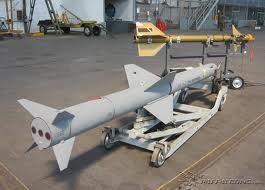
Brazil sold arms to Pakistan overlooking Indian concerns? A section of Brazilian media has carried reports about a Pakistan Air Force transport aircraft being loaded with missiles and bombs last month at Sao Jose dos Campos airport near Sao Paulo.

If these reports are true, the move will be received by surprise as just last year, Brazil had cancelled a contract to sell anti-radiation missiles - meant to destroy radars - to Pakistan. It was widely believed that the deal was cancelled keeping in mind the Indian concerns.


There is no official confirmation so far on the nature of cargo loaded on the C-130 transport aircraft of the Pakistan Air Force. One report claimed that it was short range air to air missile 1-A Piranha, whose improved version MAA-1B is still under development. Other claim has been that the cargo was unguided bombs based on the US MK Series.


The reports also claimed that the sale was kept a secret due to a confidentially clause in the contract.
Related tags .....

Has Pakistan Signs Deal with China to Co-produce Six Subs With The Technology that India Wants?


Even as India has announced its intent to have new generation diesel-electric submarines, Pakistan has gone ahead and signed a deal with long-standing ally China to produce submarines with the same technology that India wants.
The Pakistan Navy and China’s Ship Building Corporation signed a deal that got the seal of finality during the visit of Chinese Premier Wen Jiabao to Pakistan last December. Indian security agencies in know of the matter have cautioned the government that this could tilt the balance in favour of the Pakistan Navy in the Arabian Sea.

India is looking to spend Rs 50,000 crore to acquire six new diesel-electric submarines that will be equipped with air-independent propulsion (AIP) technology to boost operational capabilities. Conventional diesel-electric submarines have to surface every couple of days for oxygen to recharge their batteries. A submarine using AIP technology can stay submerged for 12-15 days at a stretch, thus increasing its capacity to hunt down enemy warships without being detected. Nuclear powered submarines can stay underwater for even longer periods.
Related tags .....

Saturday, January 22, 2011

Top 5 Fighter Planes Under Development


F-35:

The Lockheed Martin F-35 Lightning II is a family of fifth-generation, single-seat, single-engine stealth multirole fighters. After entering service it would be considered as the most advanced fighter aircraft in the world, performing ground attack, reconnaissance, and air defense missions.
The F-35 Lightning II, also known as the Joint Strike Fighter (JSF), integrates advanced very low observable stealth into a supersonic, highly agile 5th generation fighter. The capabilities built into the F-35 Lightning II provide the pilot with unprecedented situational awareness and unmatched lethality and survivability.

Some of its salient features are :
- Dominates all adversaries in the air or on the surface.
- Has the ability to survive and prosecute the most formidable threats expected to emerge beyond 2020.
- Conducts air-to-air and air-to-ground combat missions simultaneously.
- Incorporates the most powerful and comprehensive sensor and mission avionics package ever to fly in a fighter.


Sukhoi’s T-50 PAK FA:

The Sukhoi PAK FA is a fifth-generation jet fighter being developed by Sukhoi for the Russian Air Force.The current prototype is Sukhoi’s T-50. The PAK FA, when fully developed, is intended to replace the MiG-29 Fulcrum and Su-27 Flanker in the Russian inventory and serve as the basis of the Sukhoi/HAL FGFA project being developed with India. As a fifth generation jet fighter, it is designed to directly compete with Lockheed Martin’s F-22 Raptor and F-35 Lightning II. The T-50 performed its first flight January 29, 2010.Its second flight was on February 6 and its third on February 12. As of August 31, 2010, it made 17 flights in total.Sukhoi director Mikhail Pogosyan has projected a market for 1,000 aircraft over the next four decades, which will be produced in a joint venture with India, two hundred each for Russia and India and six hundred for other countries.He has also said that the Indian contribution would be in the form of joint work under the current agreement rather than as a joint venture. The Indian Air Force will “acquire 50 single-seater fighters of the Russian version” before the two seat FGFA is developed. The Russian Defense Ministry will purchase the first ten aircraft after 2012 and then 60 after 2016.


Medium Combat Aircraft (MCA):


The Advanced Medium Combat Aircraft (AMCA), formerly known as the Medium Combat Aircraft (MCA), is a twin-engined 5th generation stealth multirole fighter being developed by India. It will complement the HAL Tejas, the Sukhoi/HAL FGFA, the Sukhoi Su-30MKI and the yet undecided MRCA in the Indian Air Force. The main purpose of this aircraft is to replace the aging SEPECAT Jaguar & Dassault Mirage 2000. The Medium Combat Aircraft [MCA] is envisioned as a replacement for the British Jaguar and Mirage 2000 the IAF flies, which as of 2002 were to be phased out by 2015. Development costs were expected to be over US $2 billion. At that time, India’s DRDO intended to develop a stealth Medium Combat Aircraft, a further extension of its LCA design, in order to replace the Jaguar and Mirage inventory beginning around 2010.The MCA designers plan to pursue technologies superior to anything currently on offer. India’s aeronautical designers see the MCA programme as crucial for taking forward the expertise that has been painstakingly accumulated in the Tejas LCA programme.


J-XX Stealth Fighter:


China has already launched its next generation stealth fighter aircraft programme, and Shenyang Aircraft Industry Co. (SAC) has been selected to head research and development of a new fighter for the PLA Air Force (PLAAF). According to the reports, development of the subsystems including the engine and weapon suite for the next generation fighter, which was code named by the Western intelligence as J-XX, has been underway for some time. Images of the concepts show a twin-engine aircraft sharing some design traits with Lockheed Martin’s stealth F/A-22 “Raptor” multirole fighter such as the internal carriage of its weapons.

Not too much public information about the programme is available at the moment. Sources within China’s confirmed that the SAC is looking at a twin-engine, single-seat, single vertical tale fin design, but other design proposals has yet been ruled out. As China has developed close ties with Russia’s aerospace industry and has license produced many planes of formal Soviet designs, it can be predicted that the J-XX would include some, if not many Russian technologies and designs. China has been offered a ‘joint development and production’ of a new fifth-generation fighter by Russia -LFI. Russia has been trying to sell this concept both to China and India for some time, but neither of them has committed fully yet. Stealth and thrust vectoring are two must-have features in all aircraft being designed in the 21st century. It is not clear that how much progress Chinese designers have made in these areas, and Chinese aircraft industry may have to take Western/Israeli/Russian helps to make the J-XX truly fouth-generation (or fifth-generation using the Russian standards). Once introduced, the J-12′s immediate rival will be U.S. F/A-22, JSF and India’s MCA (Medium Combat Aircraft).


JASDF Stealth Fighter ATD-X:


JASDF (Japan Air Self-Defense Forces) planners have been attempting to acquire the American F-22 Raptor jet fighter to replace their current F-15 Eagle fighter planes. The F-22 Raptor is packed with the latest avionics and stealth technology but its high tech features have the Pentagon concerned about security leaks. Even though the United States would lose out financially by not selling Japan the F-22, security issues are front & center these days and Japan is now looking to its own aircraft designers to provide a home-grown solution.


The Mitsubishi ATD-X Shinshin is a Japanese aircraft being developed by the Ministry of Defense Technical Research and Development Institute (TRDI) for research purposes. ATD-X is an acronym which represents “Advanced Technology Demonstrator – X”. The main contractor is Mitsubishi Heavy Industries. This aircraft will be used as a technology demonstrator and research prototype to determine whether domestic advanced technologies for a fifth generation fighter aircraft are viable. The aircraft’s first flight is scheduled for 2014. The design of the aircraft reflects those of several American fourth and fifth generation fighters, most notably the F-22. Japan is set to develop its own next-generation stealth fighter jets to reduce its dependence on foreign technology and counter similar moves by China and Russia.
Related tags .....

Friday, January 21, 2011

Indian Navy's Elite Marine Commandos Armed With Israeli TAR-21 Tavor Assault Rifles


The Indian Navy's elite marine commandos will this month be armed with
Israeli assault and rifles that will enhance their operational
capability as a force trained for special operations. A consignment of
over 500 TAR-21 Tavor assault rifles and another 30 Galil sniper rifles
worth over Rs.15 crore ($3.3 million) and Rs.2 crore respectively was
delivered to the MARCOS (marine commandos) in December 2010, a defence
ministry official told reporters.

A team from the Israeli Military Industries (IMI), the manufacturer of
the specialist weapons, will be in India to carry out joint inspection
of the consignment's post-delivery quality to ensure the weapons are in
fighting-fit condition. "The lot of over 500 Tavor and 30 Galil rifles
has arrived and the Israeli team will be here to jointly inspect the
delivered weapons and for assembling them. The MARCOS will begin using
these rifles and start training on them from this month," the official
said. He did not wish to be identified because of ministry rules.


Related tags .....

IAF To Get 42 More HAL-Produced Su-30MKIs Fighters


Hindustan Aeronautics expects the Indian air force to order an additional 42 locally produced Sukhoi Su-30MKIs.


The possible order would come on top of the 180 Su-30MKIs HAL is
already producing for the air force, says company chairman Ashok Nayak.


About 105 aircraft from the 180-strong order have been delivered so
far, Nayak says. In addition, in mid-2010, India ordered 40 Su-30MKIs as
flyaways from Russia's Sukhoi.
Related tags .....

Indian Tejas Multi-Role Light Combat Aircraft Gets Its Operational Clearance:IOC


India has joined the select club of countries making a
fighter jet from scratch, receiving operational clearance for its first
lightweight indigenous multi-role Light Combat Aircraft.

Dubbed Tejas, the new fighter was handed over to the Indian air force this week by Defense Minister A.K. Antony.

Describing the hand-over as a "historic occasion," Antony said the
state-of-the-art aircraft would enhance national security and the
country's aspirations of buildings it own warplane capability.

The project is said to have been conceived 27 years ago as a replacement
for the air force's aging MiG-21 fleet. It was conceived and designed
by the Aeronautical Development Agency of the Defense Research and
Development Organization's and manufactured at the Hindustan Aeronautics
Limited.


"After accomplishing a series of milestones of envelope expansion,
sensor integration and weapon delivery in over 1,500 sorties, the
country is poised for a major turning point with the declaration of the
IOC," Antony said during the hand-over ceremony.

The Indian air force is expected to roll out as many as 140 Tejas aircraft by the end of the decade.

The test stage of the new fighter jet was started in January 2001 and it
has completed 1,508 flight tests using various variations, including a
two-seat trainer version.

Related tags .....

Russia And India Speed Up Work On PAK-FA After Getting Competetion From Chinese J-20


Russia and India should speed up work on their joint fifth-generation
fighter plane to meet the challenge from the Chinese rival unveiled
earlier this week, said a leading military expert.

“The Chinese prototype of a fifth-generation aircraft, J-20, appears to
be a long-range strike aircraft and as such it will pose a potential
threat to India,” said analyst Konstantin Makienko of the Moscow-based
Centre for Analysis of Strategies and Technologies (CAST).

China's stealth fighter made its first 15-minute flight on Tuesday over
an airfield in the south-western city of Chengdu. Mr. Makienko called
the test flight an “unquestionable success” for the Chinese defence
industry.

“China has emerged as the third nation developing the fifth-generation
fighter plane after the U.S. and Russia,” he told The Hindu.

The Russian expert said India and Russia should intensify efforts to
build their advanced fighter plane if they are not to lose the race to
China.

“The J-20 fighter will be a direct rival of the Russian-Indian
fifth-generation aircraft. The Chinese plane will be ready by 2020, so
time will be a crucial factor.”

The Russian prototype, T-50, made its first flight a year ago. India
joined the project only last month when the two sides signed a contract
for the preliminary design of the fifth-generation fighter aircraft to
be called Perspective Multi-role Fighter (PMF).

Related tags .....

DRDO Says Arjun MkII Version Tanks Are Ready For Trials


Within a year of the government approving a project for an upgraded
indigenous main battle tank (MBT), India's defence research agency has
readied a Mark II version that will undergo summer and winter trials
this year.


The defence ministry had last May given its nod to the Defence Research
and Development Organisation (DRDO) to develop the Arjun MkII MBT which
would have enhanced features over the first lot of 124 tanks that have
been delivered to the army over the last two years.


'The Arjun MkII tanks will go for summer trials this year and later for
winter trials at the end of 2011,' a defence ministry official said here
Monday.

Related tags .....

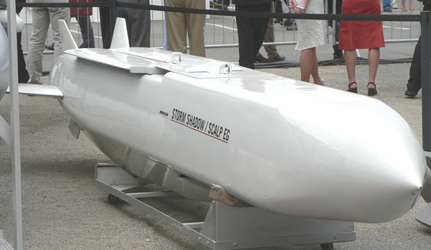
MBDA At Aero India 2011


MBDA is bringing in missile power at the Aero India 2011. Proposed in
the frame of Mirage 2000 upgrade program, MICA air-to-air missile will
also be displayed on MBDA stall. MICA is the only missile in the world
featuring two interoperable seekers (active radar and imaging infrared)
to cover the spectrum from close- in dogfight to long beyond visual
range. It is sometimes referred to as the silent interceptor as it is
extremely hard to defend against. For the Indian Air Force MMRCA missile
solutions, MBDA is displaying Meteor, Dual Mode Brimstone, Taurus KEPD
350 and SCALP/Storm Shadow. MBDA is offering them for the three European
aircraft options lined up for the IAF ’s MMRCA competition, Rafale,
Eurofighter Typhoon and Gripen.


MBDA says that Meteor, if procured, the
IAF will benefit from a performance that will ensure launch aircraft
survivability while minimising missile usage and, therefore, whole life
cost. The Dual Mode Brimstone is MBDA ’s most recent developments and a
key UK RAF weapon currently being deployed operationally in theatre in
conditions not dissimilar to those that the IAF would most likely have
to operate in. DMB is the only weapon currently available that can
engage fast moving land and sea targets with high precision. Capable of
engaging a wide variety of target types and operating safely and
effectively in the complex littoral area, DMB offers a major operational
advantage in being able to deal with the swarming FIAC (Fast Inshore
Attack Craft) threats. The Eurofighter Typhoon equipped with DMB has a
distinct advantage over helicopters as it can rapidly confront a threat
which could be engaged asymmetrically optimising the effectiveness.
Significantly, DMB has been used with the Litening pod designator which
is already in service with the IAF. As for Deep Strike operations, MBDA
has two cruise missiles to offer for the MMRCA programme. Taurus KEPD
350 for the Eurofighter Typhoon and Gripen and SCALP/Storm Shadow for
the Rafale. Both weapon systems are in service and have proven their
unerring and unmatched ability to fulfil and indeed exceed the
requirements stipulated by the IAF in terms of range, target effect and
CEP (Circular Error Probable). For ALH DHRUV and LCH helicopters, MBDA
is offering PARS 3. This fire and forget system developed for Germany ’s
Tiger helicopter is capable of targeting and defeating a wide range of
mobile and stationary ground targets from latest generation
armour-protected vehicles to bunkers with pinpoint accuracy.

Related tags .....

Thursday, January 20, 2011

Indian Navy's UAVs to keep an eye on intrusion


Porbander: Surveillance along the western coastline has been beefed up with the commissioning of a squadron of Unmanned Aerial Vehicles (UAVs) at the Naval base in Porbander.
The Unmanned Aerial Vehicle, called the Heron, will now keep an eye on intrusions along the western coast, which was used by the 26/11 attackers to enter Mumbai.
Its operations will entirely be controlled from a remote location and will send back pictures and videos of any suspicious movement in the sea. The Heron is equipped to locate even submarines, warships and aircraft, and can remain in the sky for up to 12 hours at a stretch.
"It doesn't have a pilot who can get tired. So it has a lot of endurance. It can fly far or survey from near. It has the potential to carry equipment such as a camera, a communication interceptor and video transmitter. These UAVs will prove to be a big boost for surveillance. They are equipped with most advanced systems and can fly for long hours," says Western Naval Command spokesperson Captain Manohar Nambiar.
Accompanying the Heron is the third generation Searcher MK2 which has also been commissioned.

Smaller in size than the Heron, the Searcher is also equipped with electro-optical camera and electronic support systems.
With two Heron's and two Searcher MK2 craft, the Navy will now be better equipped to handle intrusions from the sea. Navy officials say that very soon, a new version of UAVs armed with artillery will also be introduced along the western coastline.
"We will continue to upgrade these UAVs. A constant research programme is also on and definitely we will add more vehicles here," says Indian Navy's Vice Admiral Sanjiv Bhasin.
With the new UAV squadron in place, the western coastline can be secured much better.
Related tags .....

Tuesday, January 18, 2011

India, Russia discuss Admiral Gorshkov, piracy threat


NEW DELHI (PTI): India and Russia on Monday discussed ways to increase cooperation in tackling the growing threat of piracy in the Indian Ocean region and the issue of training navy personnel for operating aircraft carrier Admiral Gorshkov.

The deliberations in this regard were held between Indian Navy chief Admiral Nirmal Verma and his Russian counterpart Admiral Vladimir Sergeevich Vysotskiy, who arrived here Monday on a three-day visit.

"Whilst discussing the maritime environment, specific emphasis was laid on the growing threat of piracy in the Indian Ocean Region (IOR) and various possibilities for the two navies to co-operate," Navy officials said here.

Discussions on ongoing projects included "detailed deliberations on the training of Indian Naval personnel for the operation of aircraft carrier rechristened as INS Vikramaditya, scheduled to commence later this year," they said.

India had placed orders for the 44,500 tonne Admiral Gosshkov aircraft carrier in 2004 but the delivery schedule of the warship was delayed due to frequent price revision by the Russian side.

After the issue related to the purchase was settled last year, the warship is now expected to join the Indian Navy by the end of 2012.

The two Admirals also held discussions on issues of common interest ranging from the maritime environment in the Indian Ocean Region and operational philosophies of the two navies.

They also discussed the ways of enhancing possibilities for regularising Navy-to-Navy interactions with 'staff talks' and the feasibility of enhancing the scope of the INDRA exercises between the Indian and the Russian navies.

During his visit, Vysotskiy will also visit the Mumbai-based Western Naval Command and go on-board INS Shivalik, the indigenously built stealth frigate.

The two countries share deep historical military relations which have transformed into a strategic partnership with joint developmental projects such as BRAHMOS supersonic cruise missile system and Fifth Generation Fighter Aircraft being cases in point.
Related tags .....

Bangladesh naval delegation visits Southern Naval Command


KOCHI (PTI): A high-level delegation of Bangladesh Navy arrived on a two-day visit to the Southern Naval Command here on Monday to strengthen mutual cooperation between the two navies in areas of professional training.

The visiting delegation, led by Commodore M Nizamuddin Ahmed, Commodore Commanding, Chittagong, called on Vice-Admiral K N Sushil, Flag Officer Commanding-in-Chief Southern Naval Command.

The programme of the delegation includes a briefing on Indian Naval training and visits to various training facilities at Southern Naval Command, a Defence release said.

Several Bangladesh Navy personnel were undergoing training in various institutions under Southern Naval Command, it said.

Similarly, India has also been sending its Navy personnel to Bangladesh for training.
Related tags .....

Monday, January 17, 2011

Indian Navy Marine Commandos to be Equipped with Israeli Rifles

The Indian Navy marine commandos (MARCOS) will be armed with Israeli-made Tavor assault rifles and Galil sniper rifles to enhance their operational capability.

A defence ministry official said a consignment of over 500 TAR-21 Tavor assault rifles worth Rs150m ($3.3m) and another 30 Galil sniper rifles worth Rs20m ($437,847) was delivered to MARCOS.

"The Israeli team will be here to jointly inspect the delivered weapons and assemble them. MARCOS will begin using these rifles and start training on them from this month," the official said.
The Tavor is a 5.56mm-calibre weapon of Nato specifications while the Galil is a 7.62mm sniper weapon.

The two weapons will be a standard weapon for the force, and are already in use with the Indian Army's special forces and the Indian Air Force's Garud special forces units.

MARCOS, a force trained for special operations, is currently using the indigenous INSAS rifles and Russian Kalashnikov variants, according to IANS.


Related tags .....

Saturday, January 15, 2011

Britain wants to cooperate with India in Navy ship building


NEW DELHI (PTI): Britain Friday said it wanted to extend cooperation with India in the field of naval ship building.


"There is a considerable scope. There are common things like the way we build ships in the UK. The way we operate is common with the way India does. We do think that naval area is one where there are immense opportunities," British High Commissioner to India Richard Stagg told reporters here.

India and the UK have had a long Navy-to-Navy relationship as both the aircraft carriers which the Indian Navy has operated were earlier in service with the British Navy.

India, which has embarked on a major modernisation plan for its armed forces, has emerged as a favourite with various defence equipment-manufacturing countries with its plan of spending over USD 100 billion on defence in the next ten years.
Related tags .....

Wednesday, January 5, 2011

Indian Navy: 2010 Year-End-Review

Indian Navy: 2010 Year-End-Review
The nation woke up to the threat from the sea in the wake of the Mumbai attacks of November 2008. The Government has since initiated a slew of measures to beef up coastal security and in the year gone by the Indian Navy, besides the Coast Guard, witnessed much activity and expansion.
The Mig-29K and the INS Shivalik were the biggest force multipliers in the Navy during the year gone by. A large number of warships were also launched, including the INS Tarkash stealth frigate in Russia and INS Shakti fleet tanker in Italy in the Indian Navy’s efforts to bolster its blue water capability.
The Navy’s anti-piracy operations continued reaping dividends during the year gone by, making the sea lanes safer. Keeping up with India’s growing clout, the Navy was the foremost among the three arms in outreach, conducting exercises with foreign flotillas, the Naval ports hosting flagships of various friendly nations and the Indian warships visiting distant shores.
AUGMENTING COASTAL SECURITY
  • The Indian Navy, being the nodal agency for Coastal Security among all maritime stakeholders, established four Joint Operations Centres, - at Mumbai, Kochi, Visakhapatnam and Port Blair. Besides the Coast Guard and the state Marine Police, other agencies including the Customs, Intelligence Bureau and Ports Authorities are all networked with these centres. Also, each coastal district has been placed under an Area Operations Centre for coordinating coastal security activities.
  • The Navy conducted 26 coastal exercises during the year involving other agencies to achieve better synergy. In all 12 exercises were conducted on the West coast, ten on the East, two in Lakshadweep & Minicoy Islands and two in Andaman & Nicobar archipelago. Besides, 89 Awareness Campaigns were conducted throughout the year in a bid to involve the large fishing community into the coastal security matrix.
  • The Indian Navy also played a key role in obtaining approval of the National Committee for Strengthening Maritime and Coastal Security (NCSMCS), in April, 2010 for the National Maritime Domain awareness (MDA) Grid. The Navy later formulated a Detailed Project Report for implementing it as a project of national importance. When the common information grid would be created, it will synergise and enable effective sharing of maritime related information among all stakeholders, thereby leading to faster response by security agencies.
ANTI-PIRACY OPERATIONS
  • Indian Navy has deployed 23 ships by rotation in the piracy-infested Gulf of Aden since October 23, 2008. To date over 1,400 merchant vessels have been escorted safely, over 1200 of them from about 50 other countries, and 26 piracy attempts foiled. The Indian Navy is constantly engaged with other countries on capacity building and coordination in efforts aimed at keeping open one of the busiest shipping channels around the world and avoid choking of international trade, particularly Oil.
INDUCTIONS
  • Defence Minister Shri AK Antony inducted the air dominance fighter Mig-29K into the Indian Navy at INS Hansa, Vasco da Gama, Goa on 19th February. The 4+ Generation multirole fighter jet, equipped with Beyond Visual Range (BVR) and guided anti-ship Missiles and smart bombs, will eventually berth on the INS Vikramaditya, the Gorshkov aircraft carrier, when it is likely to be delivered in 2012.
  • Shri Antony also commissioned INS Shivalik, the first of three indigenously designed and built stealth frigates, at Mumbai on 29th April. Equipped with Combat Management System, CMS-17, manufactured by the Defence PSU Bharat Electronics Limited, Ghaziabad, the Shivalik class will be the mainstay frigates of the Navy’s fleet in the first half of the 21st century.
  • During the year two Water Jet Fast Attack Crafts were also commissioned, taking the total to eight of ten ordered.
IN THE PIPELINE
  • Tarkash, the second of the three follow on Talwar class stealth frigates being built by Yantar Shipyard, Kaliningrad, Russia, was launched on 23rd June. The Tarkash will carry the Brahmos missile in vertical launch mode, giving it 360 degrees manoeuvrability. The warship, also equipped with SAM missiles, torpedoes and Russian built anti-submarine helicopter Kamov Ka-31, will join the Indian Navy’s fleet in the second half of 2011.
  • On 11th October the INS Shakti, second of the two Indian fleet tankers being built by Fincantieri, was launched at Genoa, Italy. The first, INS Deepak, is undergoing advanced sea trials before delivery to the Indian Navy.
  • On 1st April INS Chennai, the third ship of Project-15A, was launched at Defence shipyard Mazagon Docks, Mumbai. Armed with Brahmos, the new ships of the Project-15 class will pioneer the Indian Navy’s foray into sophisticated multifunction radar system.
    During the year the Navy also obtained approval to induct six submarines under Project-75 India and four Landing Platform Dock (LPDs) ships under the ‘Buy and Make Indian’ clause.
  • The Indian Navy also concluded a contract to buy four additional P-8Is, taking the total number of the US-origin maritime aircraft ordered to 12.*
JOINT EXERCISES AND OTHER NAVAL OPERATIONS
  • Four Indian Naval warships, INS Mysore, Tabar, Ganga and Aditya, sailed for South Africa to participate in the 2nd IBSAMAR, the Joint Exercise of the Navies of India, Brazil and South Africa. They formed part of the 11 warships that held manoeuvres in waters off the coast of Durban from September 13-27, 2010.
  • The Indian Navy’s Western Fleet held the 14th Malabar Joint Exercise with the US Navy in the Arabian Sea, from 23rd April to 2nd May. One Los Angeles class nuclear-powered submarine formed part of the US Navy’s Seventh Fleet that took part in the exercise, envisaged under the India-US Framework for Maritime Security Cooperation to achieve interoperability, with the first such exercise held way back in 1992. The 7th Milan, biennial exercise of the Navies of Asia-Pacific littoral states, was held at Port Blair from August 3-8, 2010. Started in 1995, 12 countries participated this year, the highest number so far, including Australia, Malaysia, Singapore, Indonesia, Thailand, Myanmar, Bangladesh and Sri Lanka and delegations from New Zealand, Vietnam and Brunei.
  • The 7th Konkan Joint Exercise with the United Kingdom’s Royal Navy was held from 26th July while the 20th SIMBEX annual bilateral exercise with the Singapore Navy was held in the Andaman Sea and the Bay of Bengal between April 3-16, 2010.
  • The Indian Navy’s Eastern Fleet deployed Guided Missile Destroyers INS Rana and Ranjit, fleet tanker INS Jyoti and missile corvette INS Kulish to South East Asia. The ships undertook passage exercises with the Navies of Indonesia, Singapore and Australia.
  • Eight Marine Commandos including two Officers visited Mauritius from 17th May to 4th June,training 32 Special Forces personnel of the Mauritius National Coast Guard in operations including heliborne. Earlier four Marcos including an Officer trained 12 men of the Maldives National Defence Force commandos from April 15-26, 2010.
  • Indian Navy also executed Operation ‘Raasta Saaf’ (Pathfinder) on 10th August in the wake of containers falling off MV Chitra off Mumbai. The Escort Force surveyed the route and ensured safe passage for vessels.
DECOMMISSIONING
  • Two Foxtrot Class submarines, - INS Vela and Vagli, commissioned in 1973 and ’74 respectively, bid adieu during the year. The Vagli, decommissioned on 9th December after more than 36 years of service, was the last of the Foxtrot Class submarines operated by the Indian Navy.
  • The last of the Seaward Defence Boats, T-58, was also decommissioned this year, in Chennai, rendering more than 25 years of service.
ADVENTURE SPORTS – SOLO CIRCUMNAVIGATION
‘Sagar Parikrama’, the first Indian solo circumnavigation, was completed when Commander Dilip Dhonde returned Mumbai on 19th May aboard the sailing boat INS Mhadei. Cdr Dhonde’s voyage began on August 19, 2009 and took him through 21,600 nautical miles, or 38,880 kms, around the world, during its 277 day odyssey, overcoming very often the rough sea. Cdr Dhonde’s feat can be appreciated by the fact that less than 300 people have succeeded in the attempt so far.
Related tags .....

India seeks Indian Ocean supremacy with warship research

India seeks Indian Ocean supremacy with warship researchIndia launched a new naval research centre for warships on Tuesday, part of efforts by the South Asian giant to build its sea defences and counter the perceived threat of China in the Indian Ocean.
Defence Minister A.K. Antony laid the foundation stone for the National Institute for Research and Development in Shipbuilding (NIRDESH) in the southern state of Kerala, which will be built at a cost of six billion rupees (133 million dollars).
The facility, which will be up and running in two years, will help develop technology for "drawing board to delivery" of warships for India, a naval official said.
The Kerala unit will work independently of the national Defence Research and Development Organisation, with the aim of reducing India's dependence on military imports, which mostly come from Russia.
The 136-vessel navy said in a statement that NIRDESH would ensure India's maritime security.
"This would empower Indian navy, coastguard and other maritime security agencies in a manner befitting the country's stature and influence in the region," it said.

The facility would "ensure that the country would be self-reliant in this crucial area of defence technology," Antony added.
New Delhi is wary of growing Chinese influence around the Indian Ocean, where Beijing has funded or plans to invest in major infrastructure projects, including ports in Sri Lanka, Bangladesh and military-ruled Myanmar.
In August, two Chinese warships raised eyebrows in Delhi when they sailed to adjoining Myanmar for a rare visit to promote ties between the two allied countries.
Retired admiral Arun Prakash, a former Indian naval chief, recently warned that the Chinese navy will have more warships than the United States within a decade and urged India to speed up naval procurement.
Analysts say India falls behind China in naval firepower, but the country should strive for supremacy in the strategic Indian Ocean, a vital shipping lane connecting Asia to Europe and the Middle East.
"Just because we cannot compete with China does not mean we do not defend our interests in the Indian Ocean where we want naval supremacy," retired Indian navy rear admiral Raja Menon told AFP.
India has already begun strengthening its military presence in the Andaman archipelago, which lies south of Myanmar, as part of plans to protect its interests in the ocean.
Delhi, which wants to boost its 14-strong submarine fleet, launched its first nuclear-powered submarine in 2009 and has invested in its military shipyards to start building an aircraft carrier and stealth frigates.
It also plans to buy eight long-range maritime spy planes by 2015 besides six Franco-Spanish Scorpene submarines for which orders were placed in 2006.
According to the Stockholm International Peace Research Institute, China's military spending was the second-largest in the world, after the United States, in 2009.
KPMG consultancy firm estimates India plans to spend 112 billion dollars on defence hardware between now and 2016.
India hiked its 2010-2011 military spending by four percent to 32 billion dollars but analysts like Menon warn that the navy's share of 16 percent of the defence allocation is insufficient for funding its expansion plans.
India and China fought a brief border war in 1962 and still have unresolved territorial disputes.
Related tags .....

Indian, US Navy joint exercise off Andaman cost from today

NEW DELHI (PTI): Aiming to strengthen their capabilities in techniques associated with salvage and diving, navies of India and the US will hold a week-long joint exercise codenamed 'SALVEX' off the coast off Andaman and Nicobar Islands from today.

In the exercise, Indian Navy’s diving tender INS Nireekshak and USS Safeguard, a specialised Salvage ship are participating.

During the exercise, the Indian Navy will also gain experience of working on underwater Remotely Operated Vehicles (ROVs) and side scan SONARs being launched from USS Safeguard, Navy officials said.

It will also witness the operation of Hot Tap Equipment which is used for removal of oil or fuel from tanks of sunken vessels.


In the exercise, the Indian Navy team comprises 17 Clearance Divers including two officers and the US Navy team comprises 15 divers including two officers.

During the exercise, divers of the two sides will also hone their salvage skills on 'Mud Monster' – a pontoon specially built and sunk to practice salvage and diving exercises.

India is one of the four countries in the world having the capability to dive up to the depths of 300 metres into the sea.

INS Nireekshak is Indian Navy’s specialist diving support ship with the capacity to support dives up to 300 metres deep.

USS Safeguard is a Safeguard class auxilliary rescue and salvage ship.

The maiden SALVEX was conducted in 2005 and the series of exercises have been conducted annually thereafter alternately in India and US Pacific locations.

Interestingly in the first SALVEX, a vintage Sea Hawk fighter aircraft was recovered from a depth of about 50 metres off Kochi.

India and the US Navy engage each other in the annual Malabar series of war games as well.


Related Photos


Related tags .....